Tips

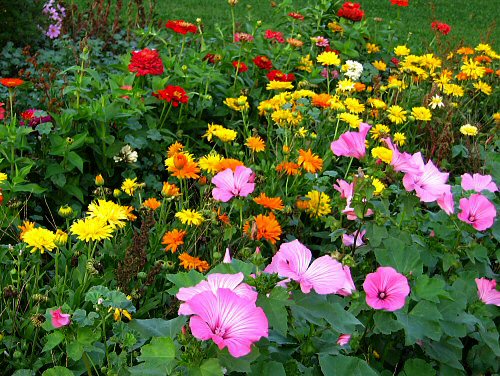
Many kinds of flower are collected Here, Besides, do you need flower in your wedding or match with your ball dresses nz?

Wednesday, October 31, 2012

5 Great Indoor Plants for Clean Fresh Air

You don’t worry about air pollution when you are in the house, do you? Indeed, if you are not safe from toxins in the air indoors, then how can you be safe anywhere?
Sadly, most household, even air conditioned ones, are not toxin-free. This is particularly true if you have a smoker in the house, if you cook with a lot of oil, if your window opens on to a busy road, or if your house is not well ventilated or doesn’t get a lot of sun. So no matter how well your house is done up, chances are you and your family are breathing in impure air.
Fortunately, there are a number of indoor plants that, apart from adding some color to your room, also serve to clean the indoor air quickly and efficiently. These plants are low maintenance and easy to grow. Of course, they aren’t just for homes. If you spend a lot of hours in an office cubicle or cabin, you should consider keeping one or more of these plants around to filter your air for you.
So choose a few plants from this list of five best indoor plants for keeping the air clean, healthy, and toxin-free:
1. Areca Palm
If trimmed regularly, the areca palm plant can grow shoulder height. Keep it in a corner near the window or door that opens on to the road. Be sure to wipe your plan’s leaves regularly.
2. Rubber Plant
If excessive humidity has turned your home’s atmosphere dank and foetid, you need a rubber plant to clear the air. Rubber plants can grow straight and tall, or in a bush, so keep in mind your space constraints when you specify what type your want at the nursery. Rubber plants soak up moisture from the air, thus making it difficult for microbes to grow. In dry weather, keep your rubber plant fresh by spraying the leaves with water every few hours.
3. Snake Plant
The Snake Plant, so named because of the shape of the leaves, is also colorfully called the Mother-in-law’s Tongue Plant. This is an ideal plant to place in your kids’ bedrooms, because it tends to absorb carbon dioxide rather than release it. For this reason, you should keep a few Snake Plants around, if you have a lot of indoor plants. This plant grows well away from the sun, but you must not over-water it.
4. Money Plant
Leafy and luscious, this creeper plant makes any room look peaceful and serene, but it also kicks ass when it comes to air cleaning! Money plants rid the air of formaldehydes and nitrogen oxides. They are very easy to keep, and will grow out of a glass bottle or a broken bulb filled with water. Money plants should be kept hanging or on high ledges indoors, as their leaves can be dangerous if accidentally eaten by household pets.
5. Chinese Evergreens
Chinese Evergreens are my favorite types of indoor plants because I just love their color and the way their leaves fan the air. The Chinese Evergreen is also a remarkable air cleansing agent in its own right. This plant can convert a smelly, polluted room into a fresh one in a day, simply by filtering out toxins.

Thursday, August 9, 2012

The Effective Ways To Help You Plant Flower Garden

Everyone loves gardening, loves a beautiful flower garden – especially if it’s yours! Whether a beginner or simply want to resume gardening after an absence of outdoor activity, be aware of the main steps to take to plant a flower garden irresistible.

Before planting a flower garden you need to analyze your location: For beginners, we suggest a flat area with lots of sunlight. In terms of soil, it is important to check the pH of the soil, what kind of nutrients has and what their level humidity – know the characteristics of the land to which will work will facilitate the choice of flowers that are appropriate for the land in question. If this is your first experience in gardening, start by planting a small area which is initially easy to maintain and can be increased if desired. Also make sure that his garden is near an accessible point of water for irrigation to make more practical.

Choose flowers and plants for a garden meets several criteria, starting with the two existing types of flowers – annuals and perianuais. In addition, plant flowers also depends on the style of garden you want to achieve, what are the dominating colors you want to have, what is the available budget, if you want to bet exclusively on flowers that require little maintenance or do not care to risk with flowers that require more care. An analysis of all these questions will help you decide what the best flowers for your garden and make a success of it in the months and years ahead.


Working the land clean and maintain the flowers in a garden, requires having the right tools for the activity in question. When it comes to gardening, the utensils necessary for any good gardener go through the blades and scissors, not forgetting the hoe, fork and watering can. To ensure the success of your flower garden, make sure you have all the gardening tools required.

The success of a flower garden also depends on your advance preparation, ie, to prevent weeds and other intruders in your future garden, the soil should be thoroughly cleaned of all kinds of herbs, roots and litter. The soil should be well churned up to, then incorporate a good compost into the soil. After the fertilizer be well incorporated into the soil, it must be completely smoothed out and watered. To facilitate the planting of flowers, you can make the ground smooth to “draw”, using a stick, the layout of your garden, or how you want to have the different flowers. Known, for example, higher plants must be placed on the back of the garden, the medium in half and the trailing or smaller in the front of the garden.

Enclose the garden with rocks or other objects not only makes the garden more appealing and beautiful, as it prevents the soil of your garden where rain drips. In addition, create a border for the garden also prevents this to be “attacked” by weeds that may come from other parts of the ground.

Selected flowers and prepared the ground, it was decided to plant the flowers using the seeds, follow the planting instructions on the packaging of the same. If you opted for potted plants / cuttings should start by making a hole in the ground that is two times larger than the vessel in which the flower is and about 6 or 7 cm deeper than the pot. At the bottom of the hole put a layer of about 6 or 7 inches of compost or manure, which will help feed the flowers in the first weeks. Fill the hole with water and wait for the soil to absorb, then put the flower inside. Refill the hole with water and begin to cover it with soil until you reach the top of the hole. Repeat for all the flowers that grow and eventually, water the whole garden and admire your work!

Monday, May 28, 2012

It Is Believed That Astragalus Makes Your Metabolism Stronger


Astragalus
With the growing popularity of Chinese medicine, more and more people are being acquainted with the numerous health benefits of astragalus – the Chinese magical herb. Be it a heart disease or a respiratory problem – astragalus helps you in curing almost all of them. Here are the top five health benefits of astragalus for which it is most commonly used:
Distribution: New Mexico, northeastern Otero County, Sacramento Mountains.

Habitat: Limestone soils on steep slopes and road cuts in lower montane coniferous forest; 1,900-2,500 m (6,500-8,200 ft).

Remarks: A narrow endemic inhabiting the forests around Cloudcroft. It was originally known from only three collections made in 1889 and 1891, then was not found again until 1968. There are now approximately 30 known locations for this species on public lands; additional locations are on tribal lands. It often inhabits road cuts and other sites for some years after disturbance, and may be generally increasing with the increase of road building within its geographic area.

Conservation Considerations: Highway maintenance and herbicide application for weed control could impact plants inhabiting road rights-of-way. Residential and recreational development in the area is extensive. The effects of forest fire on this species have not been studied. These plants are occasionally browsed by deer or elk, but its palatability to livestock has not been determined.

Aids Digestion Process:

It is believed that astragalus makes your metabolism stronger, thereby improving your digestive system. As such, it also helps in curing gastrointestinal disorders, including stomach ulcers, gas, bloating and diarrhea.

• Improves Immunity:

The antibacterial, anti-inflammatory and antiviral properties of astragalus strengthen your immunity as well. It helps in healing your wounds and injuries faster. In case a person is suffering from weakened immunity, a regular dose of astragalus helps him/her in fighting the diseases better. It also helps you fight both viral and bacterial infections. For the very same reason, it helps you fight cold, asthma, bronchitis and so on. It is also used in cancer treatments as the antioxidants present in them help the adrenal glands to work better.

• Keeps Your Heart in a Better State:

Using astragalus benefits your heart as well in a lot many ways. Astragalus can relieve a person suffering from chest pain or even breathlessness caused due to heart problems. It prevents blood clots from forming. At the same time, it helps a person in retaining less salt and water in his/her body, which in turn, helps in lowering cholesterol and blood pressure levels. The protective properties of astragalus also stop plaque from developing in arteries, thereby keeping your heart in a better state.

• Anti-Stress Agent:

The roots of this medicinal herb are believed to be an “adaptogen” and therefore, small doses of astragalus roots work wonders on your physical, mental and emotional state. It helps your body to resist fatigue, anxiety, stress, tension and trauma, thereby keeping you happy and stress-free.

• Fights AIDS:

Recent studies have claimed that astragalus roots also fight against HIV virus to a great extent. Using astragalus roots for AIDS not only helps the patient to fight the disease, but it does so without the adverse effects of harmful prescription drugs as well.

Saturday, May 5, 2012

Variegated Liriope Is One Of The Ideal Plants For Container Gardening


Variegated Liriope
There are many different types of liriope plants and the variegated types are highly valued for the stripy leaves. These plants are often mistaken for grass or lilies, but, do not come under those genera. Liriope is a genus that consists of flowering plants that may look like grass or lilies. These plants are known by different names, like, the lilyturf, monkey grass, or spider grass. They are mainly grown as edging plants or as ground covers. Some species being invasive in nature, care must be taken to control its spread. Even though, species like Liriope spicata with white flowers are grown in gardens, Liriope muscari with purple flowers are found to be one of the most popular plants in the genus. Nowadays, variegated liriope varieties are fast gaining momentum, among plant lovers.

Variegated Liriope Plant

This liriope is a cultivar of the popular Liriope muscari. But, unlike the latter, the cultivar has variegated or stripy leaves and hence the name. While Liriope muscari has dark green leaves that resemble grass blades, in case of variegated type, the green leaves have creamy yellow to white or silvery borders. Some of the leaves may appear golden yellow to creamy yellow in color. As in liriope muscari, the variegated versions too are found to be low growing and clump forming. During late summer and fall, they produce spikes of purple flowers that transform to black berries. One of the advantages of this plant is that they are shade tolerant as well as drought resistant. However, they may turn invasive and so, mowing this plant is advisable to control its unwanted growth. This will also revive the looks of the plant that will produce fresh leaves within a short span.

How to Take Care of a Variegated Liriope

Growing Liriope muscari variegata is not a difficult task, as they have certain minimal requirements only. One of the basic needs of a variegated liriope plant is the soil, which has to be preferably acidic in nature and rich in organic material. It must be well draining too. Ideally, such soil must have average moisture, for this plant to grow well. However, these plants can tolerate poor soil and even dry conditions. Another advantage about this plant is that it can grow in partial to full shade and even in full sun. But, usually, they are found to be fond of partial sun or full shade rather than full sun.

While planting this liriope, make sure to keep a distance of at least four inches between them. Prepare the soil with organic material and once planting is done, mulch the area around these plants. Mulching is good to prevent the growth of weeds. Thorough watering, once a week is found to be sufficient for liriope plants. Even though, feeding is not required, you may use any regular garden fertilizer that has to be applied during early spring and mid summer. It will be beneficial to mow these plants, during February, in order to revive its appearance. Make sure that the crowns of the plant are not damaged during mowing.

In short, variegated liriope is one of the ideal plants for container gardening, as edging plants or as ground covers. The biggest advantage of these plants is that they are non messy and easy to care. If you want to grow this liriope in your garden, contact your local nursery. The above said is only a brief overview about this plant and its growing conditions. So, it will be better to gain some extra knowledge about liriope plant care.